From cell phones and cars to televisions and refrigerators, more devices are being connected to the Internet.
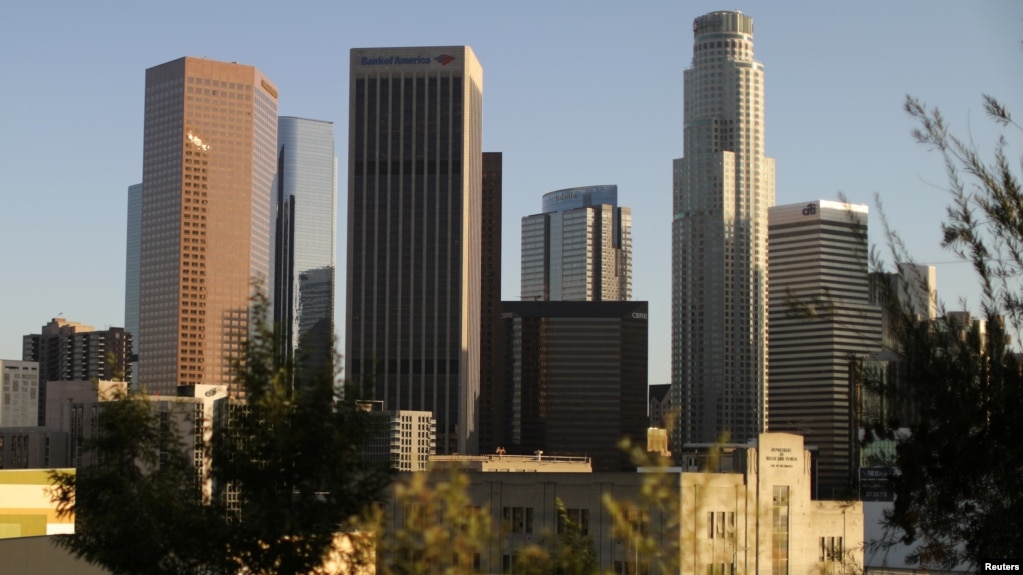
Los Angeles, the second largest city in the United States, is planning to use the prevalence of these “Internet of Things” devices as a testing ground for becoming a city of the future.
Los Angeles is a part of a consortium called “I3” that includes the University of Southern California (USC) and tech companies. This partnership is developing and will soon test an Internet of Things system. It aims to connect sensors placed around the city with other connected devices to make L.A. a smart city.
It is an endeavor that will also rely on residents’ participation, said Raman Abrol of Tech Mahindra, one of the I3 tech companies that will provide a platform for an online marketplace called Community Action Platform for Engagement or CAPE.
“Communities can collaborate with businesses and cities and share data in a manner where privacy’s enforced,” Abrol said.
“By putting computers in parking meters, you already have computers in your car, and you have computers in the street lights. The ability to connect them to the Internet of Things allows a better way for your car to know where parking spots are available, allows better for it to communicate when street lights should turn green to maximize traffic flow,” said Ted Ross, chief information officer for the city of Los Angeles.
The I3 is an Internet of Things integrator. Through I3, Los Angeles is working with the University of Southern California and vendor partners to aggregate the data and give us a better ability to make decisions, decisions to maximize traffic flow, decisions to help reduce crime, decisions to help improve business prosperity,” said Ross.
As connected devices become more ubiquitous and the flow of personal data increases, privacy and security concerns will be more scrutinized.
“I think that this is one piece of a huge emerging problem, of figuring out how we protect privacy and limit government power in an era of rapidly expanding information availability and rapidly expanding data processing abilities. So it’s not just that there are more and more data points that are available for the government to look at. It is also that we are rapidly expanding our ability to analyze data,” said Stanford University Law School professor, David Alan Sklansky.
“The more powerful the technology, the more powerful the unintended consequences,” said Yannis Yortsos, dean of the USC Viterbi School of Engineering.
“There has to be regulation so that they have legal and ethical issues taken into consideration as well,” Yortsos added.
In Los Angeles, people will choose whether they want to provide data to the city.
The smart city experiment will begin at the University of Southern California and expand to the city of Los Angeles. Some of what works for the program will be made available for other cities to use.


